

Intuitive Understanding Meaning Explained With Examples
Intuitive understanding is the kind of understanding you feel when an idea stops being just words on a page and starts making sense on its own. You can recognize it in a new situation, explain it without copying a definition and use it without constantly checking the rules.
That sounds simple, but the phrase can be confusing. Does intuitive understanding mean guessing? Is it the same as common sense? Is it different from deep understanding?
In learning, research, work and creative thinking, the intuitive understanding meaning is this: you understand something so well that you can use it naturally, even before you can explain every formal step in perfect detail. It is not magic. It is usually built through examples, practice, comparison and feedback until the idea becomes mentally available.
What Does Intuitive Understanding Mean?
Intuitive understanding means grasping the sense of an idea in a way that feels immediate and usable. You may still be able to explain the formal definition, but you are not dependent on memorized wording. You can work with the idea.
For example, a student may memorize that supply and demand affect price. But a student with intuitive understanding can look at a sold-out concert, a housing shortage or a sudden increase in coffee prices and explain why demand, supply, scarcity and incentives are involved.
Intuitive understanding usually includes four abilities:
- You can recognize the idea in unfamiliar examples.
- You can explain it in your own words.
- You can predict what might happen if one part changes.
- You can notice when an explanation feels incomplete or wrong.
This is why intuitive understanding matters. It helps you move from passive recognition to active use.
A Simple Definition You Can Use
A short definition is useful:
Intuitive understanding is a natural-feeling grasp of how something works, built from enough knowledge and experience that you can apply the idea without relying only on memorization.
The phrase has two parts. Understanding means you see relationships, causes, limits and uses. Intuitive means the understanding feels accessible, fast and almost automatic.
That does not mean it is always correct. Intuition can be wrong, especially in unfamiliar domains. Someone may have strong intuitive beliefs about probability, medicine or economics that do not match evidence. Good intuitive understanding is not just a feeling of confidence. It is a feeling of clarity supported by accurate mental models.
If you want to explore this distinction more deeply, it helps to see how knowledge and understanding work together. Knowledge gives you the pieces. Understanding helps you see how the pieces relate.
Intuitive Understanding vs Memorization vs Formal Understanding
Intuitive understanding is often confused with memorization or formal understanding. They can overlap, but they are not the same.
| Type of learning | What it looks like | Strength | Limitation |
|---|---|---|---|
| Memorization | Recalling a definition, formula or fact | Useful for accuracy and speed | Can fail when the situation changes |
| Formal understanding | Knowing the official explanation, theory or method | Good for precision and communication | May feel abstract or hard to apply |
| Intuitive understanding | Seeing how the idea works in practice | Helps with application, transfer and explanation | Can be misleading if not checked against evidence |
A good learner uses all three. Memorization is not useless. Formal definitions are not optional in many fields. But intuitive understanding is what makes knowledge flexible.
A medical student needs to memorize anatomy. A researcher needs formal methods. A software engineer needs precise syntax. But each also needs a sense of what is happening, why it matters and what changes when one variable shifts.
Examples of Intuitive Understanding
Examples make the meaning clearer. Here are several common situations where intuitive understanding shows up.
Example 1: Fractions in Math
A student may memorize that one half plus one quarter equals three quarters. That is correct, but it may not show intuitive understanding.
A student with intuitive understanding can picture a pizza, a measuring cup or a number line. They know that one half is the same as two quarters, so adding one more quarter makes three quarters. If the problem changes to one half plus one eighth, they can reason through it instead of searching for a memorized answer.
The key sign is transfer. The student can use the idea when the numbers change.
Example 2: Reading a Research Paper
A researcher might read a paper and remember the abstract, the sample size and the main result. That is useful, but it may still be surface-level.
Intuitive understanding appears when the researcher can explain why the method fits the question, what the result does and does not prove, how the paper compares with related work and where uncertainty remains.
For example, if a study finds a correlation between sleep and test scores, intuitive understanding helps the reader avoid jumping to causation. They can sense that other variables may be involved, such as stress, health, prior preparation or socioeconomic factors.
Example 3: Learning a New Language
A language learner may memorize grammar rules and vocabulary lists. That helps, especially early on.
But intuitive understanding grows when the learner starts to feel which sentence sounds natural, even before naming the grammar rule. They can infer meaning from context, choose the right phrase for the situation and understand tone.
This does not replace grammar study. It makes grammar usable.
Example 4: Professional Reports
A manager reading a financial report may know what revenue, margin and churn mean. Intuitive understanding is different. It means they can look at a pattern and sense what questions to ask.
If revenue is up but margin is down, they may ask whether acquisition costs increased, discounts expanded or the product mix changed. They are not just reading numbers. They are seeing relationships.
Example 5: Creative AI Workflows
In creative work, intuitive understanding might mean knowing why a certain prompt, reference image, approval rule or model choice affects the output. A creator does not only copy prompts. They understand how constraints, style direction and workflow design shape results.
For teams working at scale, this matters even more. A platform such as Virtuall's Creative AI OS is designed to help studios govern and orchestrate AI content creation across formats, but team members still need intuitive understanding of the workflow so they know why consistency, review steps and context matter.
Why Intuitive Understanding Matters
Intuitive understanding helps you learn faster because it reduces mental friction. When you understand an idea intuitively, you do not have to rebuild it from scratch every time you meet it.
For students, this means exam questions become easier to interpret, especially when they are worded differently from practice problems. For researchers, it means papers become easier to compare because the method, evidence and assumptions are clearer. For professionals, it means reports and technical documents become easier to act on. For educators and creators, it means complex material can be turned into clearer explanations.
This is also why summaries alone are not always enough. A summary can tell you the main points, but intuitive understanding requires relationships. You need to see how concepts connect, why an argument moves from one step to the next and where the limits are.
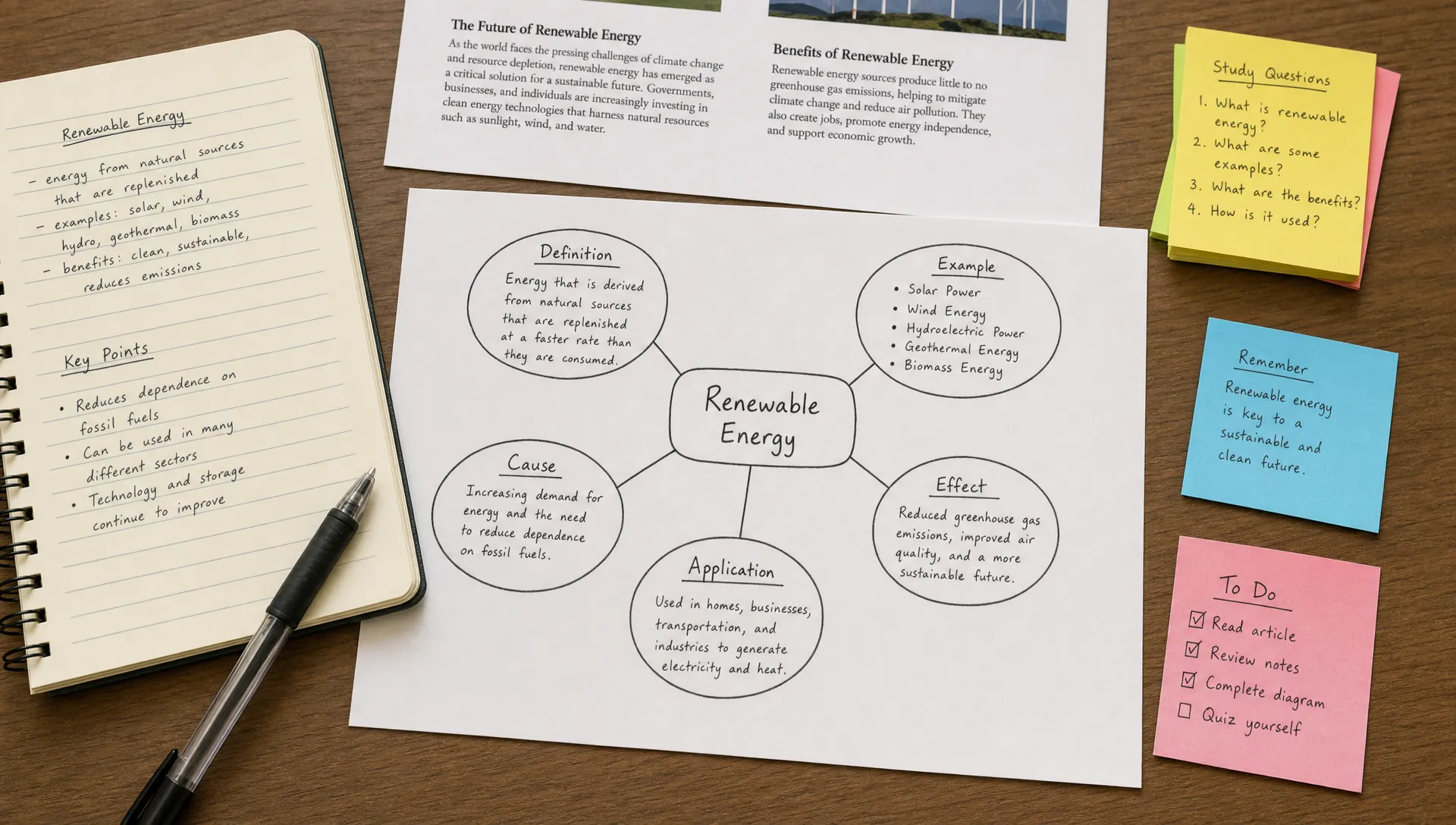
How to Know If You Have Intuitive Understanding
You can often feel intuitive understanding, but it is better to test it. Fluency can be misleading. A paragraph may seem clear while you are reading it, then become hard to explain five minutes later.
Try these checks:
- Explain the idea in simple language without looking at the source.
- Give an example that was not in the original material.
- Give a non-example and explain why it does not fit.
- Predict what would happen if one condition changed.
- Teach the idea to someone else and answer their questions.
If you can do these things, your understanding is probably stronger than recognition. If you struggle, that is useful feedback. It shows where you need another example, a clearer definition or more practice.
For a more detailed self-check, use this guide on how to test whether you truly understand a topic. It gives practical ways to separate real understanding from familiarity.
How to Build Intuitive Understanding
Intuitive understanding is not something you either have or do not have. You can build it deliberately.
Start With the Question Behind the Material
Before reading a paper, article or chapter, ask what problem it is trying to solve. This gives your mind a frame.
For example, instead of reading a machine learning paper as a collection of terms, ask: What prediction problem is being addressed? What limitation in earlier methods is this paper trying to fix? What tradeoff does the new method introduce?
Questions create structure. Structure makes intuition easier to build.
Translate the Idea Into Your Own Words
After reading a section, pause and rewrite the core idea plainly. Do not copy the author’s sentence. If the text says, the intervention produced a statistically significant improvement in retention, you might write: Students remembered more after this teaching method, and the difference was unlikely to be random under the study’s assumptions.
This forces you to process meaning, not just wording.
Use Examples and Non-Examples
Examples show where an idea applies. Non-examples show its boundaries.
If you are learning confirmation bias, an example might be someone only reading reviews that support a purchase they already want to make. A non-example might be someone comparing multiple credible sources before deciding. The contrast helps your mind locate the concept more precisely.
Switch Reading Modes Based on Your Goal
Not every piece of content needs the same level of attention. Sometimes you need a quick grasp. Other times you need a deep dive.
A quick grasp is useful when you need orientation: What is this about? Is it relevant? What are the main claims? A deep dive is better when the material affects a decision, exam, research project or piece of work.
Choosing the right mode saves time and protects quality. If you are unsure which mode fits, this guide on whether to use a quick grasp or deep dive explains how to decide based on your goal and the risk of misunderstanding.
Reframe the Same Content More Than Once
One explanation rarely builds full understanding. Try viewing the same content through several lenses:
- A one-sentence summary
- A beginner-friendly explanation
- A cause-and-effect chain
- A list of assumptions
- A teaching outline
This is where tools like unrav.io can help. Instead of treating AI as a shortcut around thinking, use it to reframe articles, PDFs, videos, podcasts or pasted text into clearer forms. A quick grasp can orient you. A teach-it style explanation can reveal gaps. A deeper reframing can help you connect ideas across sources.
The goal is not to avoid reading. The goal is to make reading more active.
Test Yourself After a Delay
Intuitive understanding becomes stronger when you retrieve it later. After an hour or a day, try to explain the idea again. If it falls apart, return to the source and identify the missing link.
This delayed check matters because recognition during reading can create false confidence. If the author’s wording is still in front of you, it is easy to feel like you understand. When the source is gone, your own mental model has to do the work.
Common Misunderstandings About Intuitive Understanding
The first misunderstanding is that intuitive understanding means guessing. It does not. Good intuition is compressed experience. It feels fast because the mind has already absorbed patterns.
The second misunderstanding is that intuitive understanding is less rigorous than formal learning. In reality, strong learners often move between intuition and formality. They use intuition to see what is happening, then use formal methods to check precision.
The third misunderstanding is that intuitive understanding always feels easy. Sometimes it starts as confusion. You compare examples, correct mistakes and struggle with the wording until the structure becomes clearer. The ease comes later.
The fourth misunderstanding is that AI can simply give you intuitive understanding. AI can summarize, reframe and organize material, but you still need to question, apply and test the idea. Understanding happens when you actively connect the output to your own reasoning.
A Practical Mini-Exercise
Choose a concept you recently read about. It could be opportunity cost, neural networks, photosynthesis, narrative structure or statistical significance.
Now answer these five prompts in your own words:
- What does the concept mean in one plain sentence?
- What is one real example?
- What is one non-example?
- What changes if one key condition changes?
- How would you explain it to a beginner in two minutes?
If you can answer all five without copying a source, you are moving toward intuitive understanding. If one answer is weak, you have found the next thing to study.
Frequently Asked Questions
What is intuitive understanding in simple words? Intuitive understanding means an idea makes sense naturally enough that you can use it, explain it and recognize it in new situations without relying only on memorized wording.
Is intuitive understanding the same as common sense? No. Common sense is general everyday judgment. Intuitive understanding is domain-specific. You can have intuitive understanding of algebra, writing, biology or product strategy because you have built a mental model in that area.
Can intuitive understanding be wrong? Yes. A feeling of clarity can be misleading if it is based on weak information or familiar but false patterns. Strong intuitive understanding should be tested with examples, evidence and formal reasoning.
How is intuitive understanding different from deep understanding? Deep understanding is broader and more rigorous. Intuitive understanding is the natural, usable feel for an idea. Deep understanding may include intuition, formal knowledge, evidence, limitations and connections to other concepts.
Can AI help me build intuitive understanding? AI can help by summarizing, simplifying and reframing material, but it cannot do the learning for you. You build intuitive understanding by asking questions, applying ideas, checking examples and explaining the concept yourself.
Make Complex Ideas Feel More Usable
Intuitive understanding is what happens when a concept becomes more than a definition. You can see how it works, where it applies and why it matters.
If you are working through dense articles, PDFs, research papers, videos or podcasts, unrav.io can help you turn complex content into clearer forms for quick grasping, deeper insight or teaching. Use it as a reading companion, then test the idea in your own words. That combination is where understanding starts to become intuitive.